Showing posts with label Reasonableness. Show all posts
Thursday, 30 May 2013
You Have Already Been Advised and Corrected On This One
https://twitter.com/ShyKeenan
Here is the link ...
Broken Truths? (Part 2)
http://therealosc.blogspot.co.uk/2013/02/broken-truths-part-2.html
However, if you feel, that The OSC has anything to answer to, we will be delighted to meet you, in any legal setting (6 months limit, recall).
You could get your plaything, the bailed, criminal, suspect, Anthony France, to send another minion, to attack, defame and endanger an innocent man, again !!!
That would be very useful.
The OSC
Labels:
Anthony France,
CA 2003,
CDA 1988,
CJA 2003,
CPS,
Free Speech,
Harassment,
MCA 1988,
Media,
PHA 1997,
Police,
Public Figure,
Reasonableness,
Research,
Shy Keenan,
Social Media,
SOCPA 2005,
Stalking
Saturday, 11 May 2013
That's What Plod Does - They Picked The Wrong Family, In This Case
10 May 2013 Last updated at 20:07
Cleveland Police in huge damages payout to lawyer
"James Watson is one of the best known defence solicitors in North Eastern England
Cleveland Police has agreed to pay £550,000 in damages after prominent defence lawyer James Watson was falsely imprisoned, BBC Newsnight has learned.
The unprecedented payout includes £80,000 in exemplary damages - the maximum possible amount."
"According to the IPCC, Ch Insp Riordan presented unsubstantiated evidence to a senior judge when he went to the Old Bailey to apply for warrants to search Mr Watson's property.
The judge was left with the impression that there were reasonable grounds to believe Mr Watson was involved in money laundering, which was untrue."
http://www.bbc.co.uk/news/uk-22452157
Cleveland Police in huge damages payout to lawyer
"James Watson is one of the best known defence solicitors in North Eastern England
Cleveland Police has agreed to pay £550,000 in damages after prominent defence lawyer James Watson was falsely imprisoned, BBC Newsnight has learned.
The unprecedented payout includes £80,000 in exemplary damages - the maximum possible amount."
"According to the IPCC, Ch Insp Riordan presented unsubstantiated evidence to a senior judge when he went to the Old Bailey to apply for warrants to search Mr Watson's property.
The judge was left with the impression that there were reasonable grounds to believe Mr Watson was involved in money laundering, which was untrue."
http://www.bbc.co.uk/news/uk-22452157
Sunday, 24 February 2013
Broken Truths? (Part 2)
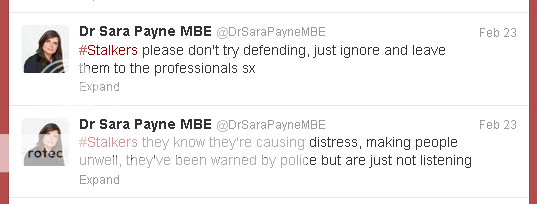
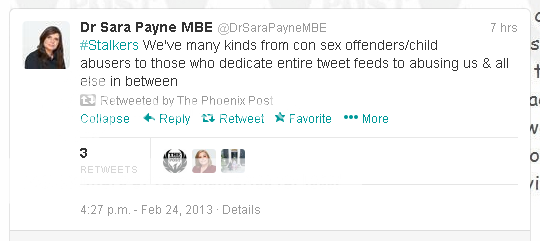
Now the police are 'involved' ... it is always difficult be sure, with these two ladies ...
Please tell us who, ladies, and when?
In passing, this really is a classic, from you, Jim ...
... but, you are 100% correct, here ...
http://www.thesun.co.uk/sol/homepage/news/justice
https://twitter.com/ShyKeenan
https://twitter.com/DrSaraPayneMBE
https://twitter.com/ThePhoenixPost
https://twitter.com/Jgineqe
https://twitter.com/search?q=%23sunjustice&src=hash
https://twitter.com/pennymellor
Now, here is a little legal information, on the issues ...
*****
"As the European Court of Human Rights has made clear, Article 10 protects not only speech which is well-received and popular, but also speech which is offensive, shocking or disturbing (Sunday Times v UK (No2) [1992] 14 EHRR 123):
“Freedom of expression constitutes one of the essential foundations of a democratic society ... it is applicable not only to “information” or “ideas” that are favourably received or regarded as inoffensive or as a matter of indifference, but also as to those that offend, shock or disturb ...”
32. Freedom of expression and the right to receive and impart information are not absolute rights. They may be restricted but only where a restriction can be shown to be both:
>Necessary and
>Proportionate.
These exceptions, however, must be narrowly interpreted and the necessity for any restrictions convincingly established (see the judgment of the European Court in the Sunday Times case at paragraph 50)
33. The common law takes a similar approach. In Chambers v DPP [2012] EWHC 2157 (Admin), the Lord Chief Justice made it clear that:
“Satirical, or iconoclastic, or rude comment, the expression of unpopular or unfashionable opinion about serious or trivial matters, banter or humour, even if distasteful to some or painful to those subjected to it should and no doubt will continue at their customary level, quite undiminished by [section 127 of the Communications Act 2003].”
34. Prosecutors are reminded that what is prohibited under section 1 of the Malicious Communications Act 1988 and section 127 of the Communications Act 2003 is the sending of a communication that is grossly offensive. A communication sent has to be more than simply offensive to be contrary to the criminal law. Just because the content expressed in the communication is in bad taste, controversial or unpopular, and may cause offence to individuals or a specific community, this is not in itself sufficient reason to engage the criminal law. As Lord Bingham made clear in DPP v Collins [2006] UKHL 40:
“There can be no yardstick of gross offensiveness otherwise than by the application of reasonably enlightened, but not perfectionist, contemporary standards to the particular message sent in its particular context.”
Interim guidelines on prosecuting cases involving communications sent via social media; Issued by the Director of Public Prosecutions, December 2012.
http://www.cps.gov.uk/consultations/social_media_consultation.pdf
*****
... and, of course, distress claimed by one person, does not mean that distress was intended by another. As for Stalking, Harassment etc, under ...
*****
"(2) Communications which specifically target an individual or individuals and which may constitute harassment or stalking within the meaning of the Protection from Harassment Act 1997 or ..."
(2) Communications targeting specific individuals
19. If communications sent via social media target a specific individual or individuals, they will fall to be considered under the Protection from Harassment Act 1997 where they amount to a course of conduct within the meaning of section 7 of that Act. In such cases, prosecutors should follow the CPS Legal Guidance on Stalking and Harassment."
*****
"S.2 offence Harassment
The elements of the section 2 offence are:
>a course of conduct;
which amounts to harassment of another; and
which the defendant knows, or ought to know amounts to harassment of another.
>Or section 1(1A), as inserted by section 125(2) of the Serious Organised Crime and Police Act 2005 (SOCPA)
>a course of conduct;
which involves harassment of two or more persons; and
which the defendant knows or ought to know involves harassment of those persons;
by which he intends to persuade any person (whether or not one of those mentioned above);
not to do something that he is entitled or required to do; or to do something that he is not under any obligation to do.
As a summary only offence, the section 2 offence requires an information or complaint to be laid within 6 months from the time when the offence was committed, or the matter of complaint arose. The 6 months' limitation should run from the last date of the course of conduct alleged.
In determining whether the defendant ought to know that the course of conduct amounts to harassment, the question to be considered is whether a reasonable person in possession of the same information would think the course of conduct amounted to harassment of the other.
Defence - Harassment - section 2
Three defences are available to the section 2 offence:
>that the course of conduct was pursued for the purpose of preventing or detecting crime;
>that it was pursued under any enactment or rule of law or to comply with any condition or requirement imposed by any person under any enactment;
>or that in the particular circumstances the pursuit of the course of conduct was reasonable."
http://www.cps.gov.uk/legal/s_to_u/stalking_and_harassment/#a03b
"Section 2A offence - Stalking
The elements of the section 2A offence are:
>a course of conduct which is in breach of section 1(1) of the Protection from Harassment Act 1997 (i.e. a course of conduct which amounts to harassment) and the course of conduct amounts to stalking.
This means that there has to be a course of conduct which amounts to harassment and that particular harassment can be described as stalking behaviour.
A course of conduct is the same as defined under section 7 of the PHA 1997 and referred to elsewhere in this guidance.
Definition of stalking
Stalking is not legally defined but section 2A (3) of the PHA 1997 lists a number of examples of behaviours associated with stalking. The list is not an exhaustive one but gives an indication of the types of behaviour that may be displayed in a stalking offence. The listed behaviours are:
(a) following a person,
(b) contacting, or attempting to contact, a person by any means,
(c) publishing any statement or other material relating or purporting to relate to a person, or purporting to originate from a person,
(d) monitoring the use by a person of the internet, email or any other form of electronic communication,
(e) loitering in any place (whether public or private),
(f) interfering with any property in the possession of a person,
(g) watching or spying on a person.
Section 2A is a summary offence and a person guilty of the offence of stalking is liable on summary conviction to imprisonment for a term not exceeding 6 months or a fine.
As a summary only offence, the section 2A offence requires an information or complaint to be laid within 6 months from the time when the offence was committed, or the matter of complaint arose. The 6 months' limitation should run from the last date of the course of conduct alleged.
An integral part of the stalking offence is establishing that harassment has taken place. In determining whether the defendant ought to know that the course of conduct amounts to harassment, the question to be considered is whether a reasonable person in possession of the same information would think the course of conduct amounted to harassment of the other."
http://www.cps.gov.uk/legal/s_to_u/stalking_and_harassment/#a03d
Cyber stalking
"Harassment can take place on the internet and through the misuse of email. This is sometimes known as 'cyberstalking'. This can include the use of social networking sites, chat rooms and other forums facilitated by technology. The internet can be used for a range of purposes relating to harassment, for example:
>to locate personal information about a victim;
>to communicate with the victim;
>as a means of surveillance of the victim;
>identity theft such as subscribing the victim to services, purchasing goods and services in their name;
>damaging the reputation of the victim;
>electronic sabotage such as spamming and sending viruses; or
>tricking other internet users into harassing or threatening a victim.
Further guidance can be found in Communications Offences, elsewhere in the Legal Guidance."
http://www.cps.gov.uk/legal/s_to_u/stalking_and_harassment/#a05a
*****
20. Where communications target a specific individual and the offence of blackmail is made out, prosecutors should seek to prosecute the substantive offence.
21. Again, where there is evidence of discrimination, prosecutors should pay particular regard to the provisions of section 28-32 of the Crime and Disorder Act 1998 and section 145 of the Criminal Justice Act 2003 (increase in sentences for racial and religious aggravation) and section 146 of the Criminal Justice Act 2003 (increase in sentences for aggravation related to disability, sexual orientation or transgender identity)."
Interim guidelines on prosecuting cases involving communications sent via social media; Issued by the Director of Public Prosecutions, December 2012
http://www.cps.gov.uk/consultations/social_media_consultation.pdf
Public consultation on the Interim Guidelines on prosecuting cases involving communications sent via Social Media (by March 13 2103)
http://www.cps.gov.uk/consultations/social_media_consultation_index.html
Consultation on the Interim Guidelines on Prosecuting Cases involving Communications sent via Social Media - Summary of Responses
http://www.cps.gov.uk/consultations/summary_of_responses_on_social_media_guidelines.html
21/06/2013 02:24
CPS Publishes Full and Final Social Media Prosecution Guidelines
http://www.huffingtonpost.co.uk/brian-john-spencer/social-media-law_b_3475608.html
20/06/2013
DPP publishes final guidelines for prosecutions involving social media communications
http://www.cps.gov.uk/news/latest_news/dpp_publishes_final_guidelines_for_prosecutions_involving_social_media_communications/
Guidelines on prosecuting cases involving communications sent via social media
http://www.cps.gov.uk/legal/a_to_c/communications_sent_via_social_media/index.html
*****
2013
Stalking and Harassment
http://www.cps.gov.uk/legal/s_to_u/stalking_and_harassment
Communications Offences
http://www.cps.gov.uk/legal/a_to_c/communications_offences
Guidelines on prosecuting cases involving communications sent via social media
http://www.cps.gov.uk/legal/a_to_c/communications_sent_via_social_media/index.html
23.2.2013
Is the prosecution of cyberstalking and online harassment in the UK a postcode lottery?
http://regainyourname.com/news/cyberbullying-cyberstalking-and-online-harassment-a-uk-study
*****
... they are, clearly, poorly-drafted and conflicting statutes/case law, and require legal/policy challenge, bearing in mind the precedents, described above.
The OSC
*****
Thursday, 20 June 2013
Freedom of Speech
http://bastardoldholborn.blogspot.co.uk/2013/06/freedom-of-speech.html#.U6r93kCa_sR
*****
2014
Guidelines on prosecuting cases involving communications sent via social media
http://www.cps.gov.uk/legal/a_to_c/communications_sent_via_social_media
Please tell us who, ladies, and when?
In passing, this really is a classic, from you, Jim ...
... but, you are 100% correct, here ...
http://www.thesun.co.uk/sol/homepage/news/justice
https://twitter.com/ShyKeenan
https://twitter.com/DrSaraPayneMBE
https://twitter.com/ThePhoenixPost
https://twitter.com/Jgineqe
https://twitter.com/search?q=%23sunjustice&src=hash
https://twitter.com/pennymellor
Now, here is a little legal information, on the issues ...
*****
"As the European Court of Human Rights has made clear, Article 10 protects not only speech which is well-received and popular, but also speech which is offensive, shocking or disturbing (Sunday Times v UK (No2) [1992] 14 EHRR 123):
“Freedom of expression constitutes one of the essential foundations of a democratic society ... it is applicable not only to “information” or “ideas” that are favourably received or regarded as inoffensive or as a matter of indifference, but also as to those that offend, shock or disturb ...”
32. Freedom of expression and the right to receive and impart information are not absolute rights. They may be restricted but only where a restriction can be shown to be both:
>Necessary and
>Proportionate.
These exceptions, however, must be narrowly interpreted and the necessity for any restrictions convincingly established (see the judgment of the European Court in the Sunday Times case at paragraph 50)
33. The common law takes a similar approach. In Chambers v DPP [2012] EWHC 2157 (Admin), the Lord Chief Justice made it clear that:
“Satirical, or iconoclastic, or rude comment, the expression of unpopular or unfashionable opinion about serious or trivial matters, banter or humour, even if distasteful to some or painful to those subjected to it should and no doubt will continue at their customary level, quite undiminished by [section 127 of the Communications Act 2003].”
34. Prosecutors are reminded that what is prohibited under section 1 of the Malicious Communications Act 1988 and section 127 of the Communications Act 2003 is the sending of a communication that is grossly offensive. A communication sent has to be more than simply offensive to be contrary to the criminal law. Just because the content expressed in the communication is in bad taste, controversial or unpopular, and may cause offence to individuals or a specific community, this is not in itself sufficient reason to engage the criminal law. As Lord Bingham made clear in DPP v Collins [2006] UKHL 40:
“There can be no yardstick of gross offensiveness otherwise than by the application of reasonably enlightened, but not perfectionist, contemporary standards to the particular message sent in its particular context.”
Interim guidelines on prosecuting cases involving communications sent via social media; Issued by the Director of Public Prosecutions, December 2012.
http://www.cps.gov.uk/consultations/social_media_consultation.pdf
*****
... and, of course, distress claimed by one person, does not mean that distress was intended by another. As for Stalking, Harassment etc, under ...
*****
"(2) Communications which specifically target an individual or individuals and which may constitute harassment or stalking within the meaning of the Protection from Harassment Act 1997 or ..."
(2) Communications targeting specific individuals
19. If communications sent via social media target a specific individual or individuals, they will fall to be considered under the Protection from Harassment Act 1997 where they amount to a course of conduct within the meaning of section 7 of that Act. In such cases, prosecutors should follow the CPS Legal Guidance on Stalking and Harassment."
*****
"S.2 offence Harassment
The elements of the section 2 offence are:
>a course of conduct;
which amounts to harassment of another; and
which the defendant knows, or ought to know amounts to harassment of another.
>Or section 1(1A), as inserted by section 125(2) of the Serious Organised Crime and Police Act 2005 (SOCPA)
>a course of conduct;
which involves harassment of two or more persons; and
which the defendant knows or ought to know involves harassment of those persons;
by which he intends to persuade any person (whether or not one of those mentioned above);
not to do something that he is entitled or required to do; or to do something that he is not under any obligation to do.
As a summary only offence, the section 2 offence requires an information or complaint to be laid within 6 months from the time when the offence was committed, or the matter of complaint arose. The 6 months' limitation should run from the last date of the course of conduct alleged.
In determining whether the defendant ought to know that the course of conduct amounts to harassment, the question to be considered is whether a reasonable person in possession of the same information would think the course of conduct amounted to harassment of the other.
Defence - Harassment - section 2
Three defences are available to the section 2 offence:
>that the course of conduct was pursued for the purpose of preventing or detecting crime;
>that it was pursued under any enactment or rule of law or to comply with any condition or requirement imposed by any person under any enactment;
>or that in the particular circumstances the pursuit of the course of conduct was reasonable."
http://www.cps.gov.uk/legal/s_to_u/stalking_and_harassment/#a03b
"Section 2A offence - Stalking
The elements of the section 2A offence are:
>a course of conduct which is in breach of section 1(1) of the Protection from Harassment Act 1997 (i.e. a course of conduct which amounts to harassment) and the course of conduct amounts to stalking.
This means that there has to be a course of conduct which amounts to harassment and that particular harassment can be described as stalking behaviour.
A course of conduct is the same as defined under section 7 of the PHA 1997 and referred to elsewhere in this guidance.
Definition of stalking
Stalking is not legally defined but section 2A (3) of the PHA 1997 lists a number of examples of behaviours associated with stalking. The list is not an exhaustive one but gives an indication of the types of behaviour that may be displayed in a stalking offence. The listed behaviours are:
(a) following a person,
(b) contacting, or attempting to contact, a person by any means,
(c) publishing any statement or other material relating or purporting to relate to a person, or purporting to originate from a person,
(d) monitoring the use by a person of the internet, email or any other form of electronic communication,
(e) loitering in any place (whether public or private),
(f) interfering with any property in the possession of a person,
(g) watching or spying on a person.
Section 2A is a summary offence and a person guilty of the offence of stalking is liable on summary conviction to imprisonment for a term not exceeding 6 months or a fine.
As a summary only offence, the section 2A offence requires an information or complaint to be laid within 6 months from the time when the offence was committed, or the matter of complaint arose. The 6 months' limitation should run from the last date of the course of conduct alleged.
An integral part of the stalking offence is establishing that harassment has taken place. In determining whether the defendant ought to know that the course of conduct amounts to harassment, the question to be considered is whether a reasonable person in possession of the same information would think the course of conduct amounted to harassment of the other."
http://www.cps.gov.uk/legal/s_to_u/stalking_and_harassment/#a03d
Cyber stalking
"Harassment can take place on the internet and through the misuse of email. This is sometimes known as 'cyberstalking'. This can include the use of social networking sites, chat rooms and other forums facilitated by technology. The internet can be used for a range of purposes relating to harassment, for example:
>to locate personal information about a victim;
>to communicate with the victim;
>as a means of surveillance of the victim;
>identity theft such as subscribing the victim to services, purchasing goods and services in their name;
>damaging the reputation of the victim;
>electronic sabotage such as spamming and sending viruses; or
>tricking other internet users into harassing or threatening a victim.
Further guidance can be found in Communications Offences, elsewhere in the Legal Guidance."
http://www.cps.gov.uk/legal/s_to_u/stalking_and_harassment/#a05a
*****
20. Where communications target a specific individual and the offence of blackmail is made out, prosecutors should seek to prosecute the substantive offence.
21. Again, where there is evidence of discrimination, prosecutors should pay particular regard to the provisions of section 28-32 of the Crime and Disorder Act 1998 and section 145 of the Criminal Justice Act 2003 (increase in sentences for racial and religious aggravation) and section 146 of the Criminal Justice Act 2003 (increase in sentences for aggravation related to disability, sexual orientation or transgender identity)."
Interim guidelines on prosecuting cases involving communications sent via social media; Issued by the Director of Public Prosecutions, December 2012
http://www.cps.gov.uk/consultations/social_media_consultation.pdf
Public consultation on the Interim Guidelines on prosecuting cases involving communications sent via Social Media (by March 13 2103)
http://www.cps.gov.uk/consultations/social_media_consultation_index.html
Consultation on the Interim Guidelines on Prosecuting Cases involving Communications sent via Social Media - Summary of Responses
http://www.cps.gov.uk/consultations/summary_of_responses_on_social_media_guidelines.html
21/06/2013 02:24
CPS Publishes Full and Final Social Media Prosecution Guidelines
http://www.huffingtonpost.co.uk/brian-john-spencer/social-media-law_b_3475608.html
20/06/2013
DPP publishes final guidelines for prosecutions involving social media communications
http://www.cps.gov.uk/news/latest_news/dpp_publishes_final_guidelines_for_prosecutions_involving_social_media_communications/
Guidelines on prosecuting cases involving communications sent via social media
http://www.cps.gov.uk/legal/a_to_c/communications_sent_via_social_media/index.html
*****
2013
Stalking and Harassment
http://www.cps.gov.uk/legal/s_to_u/stalking_and_harassment
Communications Offences
http://www.cps.gov.uk/legal/a_to_c/communications_offences
Guidelines on prosecuting cases involving communications sent via social media
http://www.cps.gov.uk/legal/a_to_c/communications_sent_via_social_media/index.html
23.2.2013
Is the prosecution of cyberstalking and online harassment in the UK a postcode lottery?
http://regainyourname.com/news/cyberbullying-cyberstalking-and-online-harassment-a-uk-study
*****
... they are, clearly, poorly-drafted and conflicting statutes/case law, and require legal/policy challenge, bearing in mind the precedents, described above.
The OSC
*****
Thursday, 20 June 2013
Freedom of Speech
http://bastardoldholborn.blogspot.co.uk/2013/06/freedom-of-speech.html#.U6r93kCa_sR
*****
2014
Guidelines on prosecuting cases involving communications sent via social media
http://www.cps.gov.uk/legal/a_to_c/communications_sent_via_social_media
Labels:
Alarm,
Broken,
CA 2003,
CDA 1988,
CJA 2003,
CPS,
Distress,
Free Speech,
Harassment,
MCA 1988,
Media,
PHA 1997,
Police,
Public Figure,
Reasonableness,
Research,
Shy Keenan,
Social Media,
SOCPA 2005,
Stalking
Thursday, 7 February 2013
Broken Truths? (Part 1)
Presently, there is a bit of a Twitter War, in progress, between The Sun's 'journalists', authors, public figures and company directors, Ms Shy Keenan and Ms Sara Payne (are you declaring your earnings, ladies, to those who need to know?), and a number of people, who are challenging Ms Keenan's version of reality, in regards to one of her books, 'Broken'.
Ms Keenan and Ms Payne, also seem to experiencing some confusion about the nature of 'stalking', in case law and Statute.
Now ... retired (?) police officer, Jim Gamble, is on the case; we are following the issue, with great interest.
Better have a look, Jim.
https://twitter.com/ShyKeenan
https://twitter.com/DrSaraPayneMBE
https://twitter.com/ThePhoenixPost
https://twitter.com/Jgineqe
https://twitter.com/search?q=%23sunjustice&src=hash
https://twitter.com/pennymellor
Oh ... BTW, please let us know (by name) who this mysterious 'Paedophile'/'Sex Offender' is, won't you?
Or is it that a fabrication?
The OSC
Ms Keenan and Ms Payne, also seem to experiencing some confusion about the nature of 'stalking', in case law and Statute.
Now ... retired (?) police officer, Jim Gamble, is on the case; we are following the issue, with great interest.
Better have a look, Jim.
https://twitter.com/ShyKeenan
https://twitter.com/DrSaraPayneMBE
https://twitter.com/ThePhoenixPost
https://twitter.com/Jgineqe
https://twitter.com/search?q=%23sunjustice&src=hash
https://twitter.com/pennymellor
Oh ... BTW, please let us know (by name) who this mysterious 'Paedophile'/'Sex Offender' is, won't you?
Or is it that a fabrication?
The OSC
Labels:
Broken,
Disinformation,
Free Speech,
Human Rights,
Jim Gamble,
Journalist,
Lies,
News Corporation,
Penny Mellor,
PHA 1997,
Public Figure,
Reasonableness,
Research,
Sara Payne,
Shy Keenan,
Stalking,
The Sun,
Twitter
Subscribe to:
Posts (Atom)