Showing posts with label Research. Show all posts

Saturday, 3 February 2018

Light Yours


Now
*****


*****


(Embedded Tweets - click dates)

*****


*****
 
   
*****

If you are affected, by any of the issues, raised, here ...

MAPs - you are not alone - very much, not alone ...

http://www.lucyfaithfull.org.uk - stopitnow.org.uk - circles-uk.org.uk - http://www.virped.org - http://b4uact.org - https://www.stopso.org.uk - https://troubled-desire.com/home.html

http://preventell.se/?lang=en - http://www.nemup.de/index_eng.html - https://1in6.org - www.boychat.org - www.annabelleigh.net

http://www.thepreventionproject.org - https://www.csaprimaryprevention.org - https://medium.com/@TNF_13 - https://medium.com/@enderphile - https://medium.com/@DaywalkerVirPed - https://medium.com/pedophiles-about-pedophilia

https://www.samaritans.org

Tor versions, available, for most downlinks.

No, off-topic, comments here, please.

Thank you.

The OSC

Tuesday, 31 October 2017

How Much 'Normality' Is Needed For Freedom?


Hardly No Paedophiles - just normal men, in the main.

*****

24 October 2017

Police chief appalled at ‘horrifying’ scale of child porn [IIOC] voyeurism 


http://www.itv.com/news/central/2017-10-24/police-chief-appalled-at-horrifying-scale-of-child-porn-voyeurism

24 October 2017

Child abuse images [IIOC] viewed by ‘horrifying’ number of people

https://www.theguardian.com/society/2017/oct/24/police-chief-number-of-uk-child-abuse-voyeurs-horrifying

24 October 2017

Paedophiles [sic] who view child abuse images [IIOC] could escape prosecution because of 'breathtaking' scale of offending, police chief suggests

http://www.telegraph.co.uk/news/2017/10/24/paedophiles-view-child-abuse-images-could-escape-prosecution

Wednesday 25 October 2017 12:31 BST 

'Horrifying' number of men view child sex abuse images online, police warn

http://www.independent.co.uk/news/uk/crime/child-sex-abuse-images-video-online-men-uk-police-pornography-west-midlands-home-affairs-committee-a8019201.html

Published: 08:00, 25 October 2017 | Updated: 12:03, 25 October 2017

'Paedophiles [sic] need THERAPY [sic] not jail': One of Britain's top police chiefs says scale of child sex abuse [sic] is so 'horrifying' prosecution alone is not the answer

http://www.dailymail.co.uk/news/article-5015105/Police-chief-says-scale-child-sex-abuse-horrifying.html

Published time: 25 Oct, 2017 10:42; Edited time: 26 Oct, 2017 09:33

Child-porn images [IIOC] so widespread, police can’t prosecute everyone – chief constable 


https://www.rt.com/uk/407711-child-sex-online-police

12:00, 25 OCT 2017; Updated14:38, 25 OCT 2017

Police chief asks if people who view child porn [IIOC] should be offered counselling instead of prosecution 
 

The answer is much more simple and correct.

http://www.birminghammail.co.uk/news/midlands-news/west-midlands-police-chief-calls-13809544

10th August 2017

Visits to child porn [IIOC] addiction website double in a month

http://www.heraldscotland.com/news/15462789.Visits_to_child_porn_addiction_website_double_in_a_month

*****

http://www.parliament.uk/documents/commons-committees/home-affairs/Formal-Minutes-2017-19/Formal-Minutes-Home-Affairs.pdf

http://www.parliament.uk/business/committees/committees-a-z/commons-select/home-affairs-committee/formal-minutes/

*****

Medieval Puritanism will only lead to Medieval Responses.

Never fight a battle, you cannot win; you have been told enough.

Decriminalise the possession of any image, or text, now.

The OSC

*****

First They Came For The 'Terrorist' Books ...

https://therealosc.blogspot.co.uk/2014/12/first-they-came-for-terrorist-books.html

Because You Cannot Believe Something, Does Not Preclude You From Being Ignorant And/Or Stupid And/Or Incorrect

https://therealosc.blogspot.co.uk/2015/01/because-you-cannot-believe-something.html

 https://therealosc.blogspot.co.uk/search/label/Censorship

Monday, 20 February 2017

Rapped Knuckles, Truth Is Hard - Was It the Essay, Or Not?


*****

Mar 31, 2016 at 9:54 am

Opinion: Nintendo got it right on Alison Rapp's firing

"Nintendo made a smart decision in a bad situation.

Nintendo fired Alison Rapp, and it's the right call. Not because of a smear campaign, which was utter horsesh*t, but because of her words and actions while employed at Nintendo.

Let's address the smear campaigns. They originate from her detractors finding a publicly available academic writing from her college days. It seems to take an unpopular stance on Japan's right to make their own laws regarding depictions of child sexuality. It's an uncomfortable topic to be sure, but any topic should be open to properly researched and reasoned academic discourse. Barring her actually diddling children, she did nothing wrong by discussing a controversial subject, even if you don't agree with it.

If that was the sole reason for her firing, I would be there with the rest of the pitchfork-wielding mob, but it's not.

Rapp chose to write about child sexuality and air controversial opinions on social media sites, and made no bones about her posts being intentionally inflammatory. She (allegedly) moonlighted as a model for suggestive photos, and posted a sample from her “shoot” on her twitter. There's nothing particularly bad about any of these things on their own.

The problem is that Alison Rapp was employed by Nintendo of America in the PR field. You know, the only major video game company that's adamant about catering almost exclusively to children and families. We can clearly see Rapp was aware that she needed to be careful about what was and wasn't appropriate, given her position with Nintendo and working with children, but that didn't stop her from making “edgy” posts on twitter, be they serious or in jest."

http://www.gamezone.com/originals/opinion-nintendo-got-it-right-on-alison-rapp-s-firing-jzmk

Mar 31, 2016

Internet Trolls Win?

"Internet trolls use various tactics to shame, discredit, harass, isolate, and mentally/emotionally torture individuals. They don’t refrain from even going through their target’s garbage to find something that points to a skeleton in someone’s closet.

Over the past few months, internet trolls have caused quite a lot of commotion for a Nintendo Employee named Alison Rapp, a female mid-level marketing face of Nintendo America. For months, internet bigots made sure they shamed, isolate, discredit, harass Ms.Rapp in every way possible.

They believe that Ms.Rapp is somehow responsible for their favorite Nintendo games being censored in America. An amorphous group has targeted her relentlessly, going as low as using her Amazon wishlist and an anime pillow to shame her.

Pointless and desperate petitions were also filed in order to get her fired from Nintendo. Unfortunately for them, nothing worked and even petitions were taken down as they violate community guidelines."

http://segmentnext.com/2016/03/31/nintendo-just-fire-someone-internet-trolls-demanded


Why did Nintendo fire this woman?

"Nintendo fired a woman named Alison Rapp on Wednesday, a decision that's putting the spotlight back on harassment in the gaming industry.

Rapp worked in marketing at Nintendo and has been a vocal advocate for women in gaming.

She was also a frequent target of online vitriol from supporters of a movement known as GamerGate. The movement purports to promote ethics in gaming -- but has been condemned for harassing women and their supporters in the gaming industry.

It was this harassment that Rapp posits cost her her job.

Rapp had found herself in the hotseat over Nintendo's decision to tone down its sexualization of girls in games, according to Kotaku.com. Though Rapp wasn't involved in the decision-making process behind these changes, she become a sort of scapegoat for those who disagreed with Nintendo.

For its part, Nintendo (NTDOF) said it let go of Rapp -- who had been at the firm since 2013 -- because it discovered she was "moonlighting" with a second job, which it said it doesn't allow."

http://money.cnn.com/2016/03/31/technology/nintendo-alison-rapp

http://www.tampabayreview.com/news/grp-nitendo-fires-alison-rapp/3450

https://medium.com/@infiltrator7n/allison-rapp-is-entitled-to-her-academic-views-but-her-defense-of-actual-child-pornography-dcc10531db3b#.vol41uu3m

https://medium.com/@jkellytwit/nintendo-s-public-relations-employee-alison-rapp-now-vocal-for-pedophiles-656f9965c6e9#.eqn7mm3w7

http://www.mmo-champion.com/threads/1972063-Alison-Rapp-fired-by-Nintendo/page12

*****

Published on Apr 13, 2011

Honors Review - Volume IV

Volume IV of the Honors Review, a nationally competitive undergraduate journal of research published yearly through the Augsburg College Honors Program

https://issuu.com/honorsreview/docs/volumeiv/33

*****

alisonrapp Protected Tweets @alisonrapp https://twitter.com/alisonrapp

*****

More to follow

Tuesday, 4 October 2016

Many Are Now Glowing


*****

September 2016

To catch a sex offender: the making of a new genre of miscarriage of justice

"On 16 October 2002, Claire Curtis-Thomas succeeded in holding a Commons debate to discuss the committee report, in which the Conservative shadow attorney-general, Edward Garnier QC, acknowledged the risks of miscarriages of justice, citing the cases of two of his own constituents. It appeared that the dangers of false convictions were beginning to be recognised by both main parties."

http://thejusticegap.com/2016/09/catch-sex-offender-part-one

To catch a sex offender: Institutional amnesia 

"Finally, in the autumn of 2012, Greenwood advised his clients to stop cooperating with Operation Reno, the criminal inquiry which he had himself triggered. The immediate result was that 53 separate police case files, which had been close to completion, had to be withdrawn from consideration by the CPS. More than 20 full-time CID officers had been working for years on inquiries that had now proven futile. The cost, needless to say, was immense.

Yet this was not the end of Operation Reno. Indeed, in the wake of the documentary that claimed to expose Jimmy Savile as a serial paedophile, as the issue of historic abuse began to occupy ever more news airtime and space in newspapers, both the St Williams civil action and the criminal inquiry continued to grow in scope. Noel Hartnett told me that by the summer of 2014, the action had attracted well over 200 claimants."

http://thejusticegap.com/2016/09/catch-sex-offender-institutional-amnesia

To catch a sex offender: The flight from reason 

"Hysteria is the right word. On some days now, when one opens a newspaper, one will find half a dozen articles about some aspect of alleged child sexual abuse. It is as if child abuse has become our greatest social ill, especially if it took place long ago.

But since the Savile and ‘Nick’ allegations, public discourse has had few, if any, limits. Richard Webster concluded The Secret of Bryn Estyn by warning that without action ‘to reintroduce reason and restraint into our system of justice,’ future historians would come to view the hunts for actual witches in the early modern era ‘as nothing’ compared to the contemporary child abuse panic. It seems to me that since he wrote those words in 2005, and especially since his tragically early death in 2011, we have come significantly closer to making that baleful vision a reality."

http://thejusticegap.com/2016/09/catch-sex-offender-flight-reason

*****

Richardwebster.net
 
"The most fervent modern advocates of reason and of science have often suggested or implied that we are no longer generally susceptible to dangerous delusions such as gripped the minds of learned men in the great European witch-hunt of the sixteenth and seventeenth centuries. This is, I believe, but another example of the dangers of rationalism. For if we accept and allow ourselves to be guided by a view of cultural history which denies the very possibility of a witch-hunt taking place in our midst, we have created the ideal conditions for one to take place in front of our eyes without our even noticing what is happening.

My own investigation into police ‘trawling operations’, which occupied me for a number of years, was not, in one sense at least, a diversion from the theory of cultural history which is worked out in other parts of this website. It was an attempt to apply that theory in practice."

http://www.richardwebster.net

***** 

Wrongful Allegations of Sexual and Child Abuse 

"While there has been a welcome increase in policies which address child abuse, rape and other sexual offences, these tend to neglect or disavow the diametrical problem of false allegations of such offences. It is inherent in the, typically, unwitnessed and physically uncorroborated nature of these ‘hidden’ crimes that they are difficult to prosecute; but also to disprove if no crime has been committed.

Tackling an under-researched and under-discussed area, Wrongful Allegations of Sexual and Child Abuse offers thoughtful and thought-provoking discourses around an understandably difficult and sensitive area."

https://www.law.ox.ac.uk/news/2016-08-18-new-publication-research-associate-ros-burnett-wrongful-allegations-sexual-and-child

Ros Burnett @rosburnett https://twitter.com/rosburnett

(Embedded tweet - click date)

*****

September 2016

Two trials, three jailhouse snitches, a four-part documentary – but no evidence 

"By the end of the series, MWT has highlighted merely the opposite of what he intended to establish – not that he has the intellectual courage to concede this. His year-long investigation has exposed the absence of any evidence that Causley murdered his wife and, by extension, the intrinsic weaknesses of the UK criminal justice system. Causley has now served 20 years in prison for a murder for which there is simply no bona fide evidence whatever.

This series could well be used by university media departments as a study in how television documentaries seek to mislead and conceal. Had it been attempted in the days when scrupulous standards still applied at ITV, it would have been deemed untransmittable and junked."

http://thejusticegap.com/2016/09/two-trials-three-jailhouse-snitches-four-part-documentary-no-evidence

Monday, 22 June 2015

The Eikonophobiacs Are On the Move - Again


June 21, 2015

Permission-giving thoughts relating to child sexual exploitation material offending

“The children in the images were not harmed”: 

"Following on from the recent blog post detailing the development of the Children, Internet, and Sex Cognitions (CISC) scale, this post will further explore the findings from this research, focusing on the permission-giving thoughts endorsed by individuals with an offence related to child sexual exploitation material (CSEM).

The figure below provides examples of permission-giving thoughts endorsed by individuals with a child sex offence, as identified by Ward and Keenan (1999). A starting point in the research that colleagues and I carried out was to explore whether these thoughts can be applied to individuals with a CSEM related offence."

https://nextgenforensic.wordpress.com/2015/06/21/the-children-in-the-images-were-not-harmed-permission-giving-thoughts-relating-to-child-sexual-exploitation-material-offending

(Embedded Tweets, click date)

*****

Published 24 Dec 2010; DOI: 10.1348/135532506X114608; Volume 11 Issue 2 (September 2006), Pages 155-339

A Fundamental Attribution Error? Rethinking Cognitive Distortions

"The notion of ‘cognitive distortion’ has become enshrined in the offender treatment literature over the last 20 years, yet the concept still suffers from a lack of definitional clarity.

In particular, the umbrella term is often used to refer to offence‐supportive attitudes, cognitive processing during an offence sequence, as well as post‐hoc neutralisations or excuses for offending.

Of these very different processes, the last one might be the most popular and problematic.

Treatment programmes for offenders often aim to eliminate excuse‐making as a primary aim, and decision‐makers place great weight on the degree to which an offender “takes responsibility” for his or her offending.

Yet, the relationship between these after‐the‐fact explanations and future crime is not at all clear. Indeed, the designation of post hoc excuses as criminogenic may itself be an example of fallacious thinking. After all, outside of the criminal context, post hoc excuse‐making is widely viewed as normal, healthy, and socially rewarded behaviour.

We argue that the open exploration of contextual risk factors leading to offending can help in the identification of criminogenic factors as well as strengthen the therapeutic experience.

Rather than insist that offenders take “responsibility” for the past, we suggest that efforts should focus on helping them take responsibility for the future, shifting the therapeutic focus from post hoc excuses to offence‐supportive attitudes and underlying cognitive schemas that are empirically linked to re‐offending."

http://webcache.googleusercontent.com/search?q=cache:RPymCHeJR9oJ:citeseerx.ist.psu.edu/viewdoc/download%3Fdoi%3D10.1.1.352.2987%26rep%3Drep1%26type%3Dpdf+&cd=23&hl=en&ct=clnk&gl=uk

http://citeseerx.ist.psu.edu/viewdoc/download?doi=10.1.1.352.2987&rep=rep1&type=pdf

http://psychsource.bps.org.uk/details/journalArticle/3355871/A-fundamental-attribution-error-Rethinking-cognitive-distortions.html

http://onlinelibrary.wiley.com/doi/10.1348/135532506X114608/abstract

*****

March 20, 2011, doi: 10.1177/0306624X11402945 Int J Offender Ther Comp Criminol May 2012 vol. 56 no. 3 465-482

Making Sense, Making Good, or Making Meaning? Cognitive Distortions as Targets of Change in Offender Treatment

"Abstract

Most structured sex-offender programs are based on a cognitive-behavioural model of behaviour change.

Within this overarching theoretical paradigm, extensive use of cognitive distortions is seen as a central core symptom among sex offenders.

However, the literature on cognitive distortions lacks a clear and consistent definition of the term. 

It is unclear whether cognitive distortions are consciously employed excuses or unconscious processes serving to protect the offender from feelings of guilt or shame. 

In this article, the dominant cognitive-behavioural interpretation of cognitive distortions is contrasted with two alternative interpretations.

One is based on an attributional perspective and the notion of attributional biases. 

The other explanation is based on a narrative approach focusing on the action elements of cognitive distortions, that is, as something people do rather than something they have. 

Clinical implications of these alternative conceptualizations are discussed and illustrated throughout by a case example."

http://ijo.sagepub.com/content/56/3/465.abstract

*****

Received: 20 Aug 2012 Accepted: 28 Feb 2014 Published online: 07 Apr 2014

The Endorsement of Cognitive Distortions: Comparing Child Pornography Offenders and Contact Sex Offenders

http://www.tandfonline.com/doi/abs/10.1080/1068316X.2014.902454#.VYeIylJS-M8

*****
(Embedded Tweets, click date)

Tuesday, 31 March 2015

But You Can Rarely Beat The System


Time for these guys to take one?

*****

31/03/2015

Beating the Detector

"Anjana Ahuja asks if polygraphs - or lie detectors - should be used to monitor sex offenders in the UK, when it can reportedly take just five minutes to learn how to beat them.

After successful trials, where sex offenders made more disclosures after their use, legislation was brought in to implement polygraph testing for those with a high risk of reoffending. The tests are now being introduced nationally with members of the police undergoing polygraph training.

However, interpretation of the science is under dispute and, according to critics, the test is not only unreliable, but it can easily be beaten. Two of the United States' most notorious serial killers both passed polygraphs. Former US policeman Doug Williams, who has been teaching people how to beat the detector for decades, claims it can be done in just five minutes. He is currently awaiting trial in the United States accused, according to the FBI, of "training customers to lie and conceal crimes during polygraph examinations".

Science columnist for the Financial Times, Anjana Ahuja, argues that the introduction of polygraphs for sex offenders in the UK requires further ethical scrutiny and academic oversight.

The programme includes interviews with Doug Williams, psychologist Professor Chris French, polygraph historian Ken Alder, Jeremy Wescombe from the British Polygraph Association, Professor of forensic psychiatry Don Grubin, Professor of criminal justice Phil Rumney and DC Andrew Tinker from South Yorkshire Police, one of the first police forces to trial the use of polygraphs with sex offenders."

http://www.bbc.co.uk/programmes/b05nvg7p

*****
*****

Published on Mar 17, 2015

Man V Expert S01E02 HD 

29:00 

https://www.youtube.com/watch?v=c3IpLAAKhys

Sunday, 8 February 2015

Beginning To Understand


 So many questions ...

*****
(Embedded Tweets - click date)

*****

Feb 8 2015

Understanding the cognitions of child sexual exploitation material offenders

Danielle Kettleborough

https://nextgenforensic.wordpress.com/2015/02/08/understanding-the-cognitions-of-child-sexual-exploitation-material-offenders/

*****

28 July 2014 

What Predicts Crossover From Viewing CSEM To Engagement In Sexual Contact

http://prezi.com/7rtuf7oduqjb/?utm_campaign=share&utm_medium=copy&rc=ex0share

https://prezi.com/7rtuf7oduqjb/what-predicts-the-crossover-from-viewing-csem-child-pornog/#

*****
(Embedded Tweet - click date)

*****

“Let’s Talk About Sex”: FCRG One-Day Conference 

"The FCRG are pleased to announce that, on Thursday 14th May, an exciting one-day conference will be taking place at the University of Lincoln, entitled “Let’s Talk About Sex in Sexual Offending Research and Practice”."

http://fcrg.blogs.lincoln.ac.uk/2015/02/19/lets-talk-about-sex-fcrg-one-day-conference/
(Embedded Tweet - click date)

Monday, 22 December 2014

The 'Tactical' Polygraph


The 'Tactical' Nuclear Missile

Related to ...

Jim Cannot Let Go - Perhaps He Never Will :(  

http://therealosc.blogspot.com/2014/12/jim-cannot-let-go-perhaps-he-never-will.html

*****

Published online: 24 Feb 2014

The use of tactical polygraph with sex offenders

Abstract

"Professionals who work with sexual abusers often are faced with a significant obstacle: offenders' failure to accurately report their histories of undetected offences, particularly hands-on crimes against children.

The implications are significant and include poor risk assessment, misguided treatment planning, inadequate sentences, and insufficient supervision conditions.

This problem is particularly important with so called child pornographers—offenders whose known criminality is limited to the Internet, and who may be reluctant to admit they have engaged in the hands-on abuse of children.

The current study examines an investigative method that we refer to as tactical polygraph and describes its effectiveness in identifying previously undetected sexual offending within this population.

In our sample of 127 suspects with no known history of hands-on offending, only 4.7% admitted to sexually abusing at least one child. During polygraph procedures, an additional 52.8% of the study sample provided disclosures about hands-on abuse they perpetrated."

Michael L. Bourke, Lance Fragomeli, Paul J. Detar, Michael A. Sullivan, Edward Meyle & Mark O'Riordan

http://www.tandfonline.com/doi/abs/10.1080/13552600.2014.886729#.VJfX9csKA

http://www.childabuseactionnetwork.com/Download-document/9-Tactical-Polygraph.html - Full (pdf) 

http://webcache.googleusercontent.com/search?q=cache:4VNJeyVKGxQJ:www.childabuseactionnetwork.com/Download-document/9-Tactical-Polygraph.html+&cd=2&hl=en&ct=clnk&gl=uk - Full 

4/10/2014

Selection, Engagement and Seduction of Children and Adults by Child Molesters  


http://webcache.googleusercontent.com/search?q=cache:ekgHsbXbe-QJ:www.thechildcenter.com/wp-content/uploads/2014/03/2014-SES-short-version-no-art.pdf+&cd=4&hl=en&ct=clnk&gl=uk

http://www.thechildcenter.com/wp-content/uploads/2014/03/2014-SES-short-version-no-art.pdf

****

Initially, let us be very clear what our position is, and has always been.

We would be amazed, if relevant hands-on offenders, given free access, to exciting images of the young, did not own these images.

We would be amazed, if relevant non-hands-on offenders, given free access, to exciting images of the young, did not own these images.

Indeed, we would be amazed, if the majority of such people, did not own these images.

In a regime of restricted access, to such images, we would expect the ownership to be reduced, for both cohorts.

Bearing that in mind, for now, we will will critique the approach.

****** 

Points, as they arise ...

We really do not know what went on in these 'rapport interviews', within the three agencies. No details of discussions, quasi-plea-bargains, manipulations and other possible unethical procedures. We are asked to believe the ethical position of the authors (already seriously flawed) and the FBI et al (little to be said, there).

Credence is given to these 'amiable specialists' ...

July/August 2004, Vol 35, No. 7

Detecting Deception 

Human lie detectors

"In June, APA teamed up with the FBI and the National Institute of Justice on a comprehensive workshop for top law enforcers on the use of intuition. Experts presented the latest research on detecting deception and related psychological topics such as bias and event memory. Ekman thinks such behavioral training may help authorities spot subtle cues that they might miss because they deal with so many liars.

There are no signs of lying per se, but rather signs of thinking too much when a reply should not require thought, or of emotions that don't fit what is being spoken, he says. "We train people to look for 'hot spots,' where they're not getting a full account," he explains.

His Institute for Analytic Interviewing trains people to detect deception in the context of research findings on personality, memory and more. For example, Ekman says that skilled interrogators build rapport with suspects: "People will tell their story if they think you're being open-minded."

Meanwhile, Ekman has teamed with psychologist Maureen O'Sullivan, PhD, of the University of San Francisco, the lead investigator on a study of the hard-to-find, very small fraction of emotionally intelligent people who can very accurately distinguish deceptiveness from truthfulness. Some of them use the demeanor and vocal clues mentioned in this article, but others base their judgments on behaviors and word usage that no researcher has previously identified, O'Sullivan explains.

Can psychologists learn from these divining rods to train less-sensitive people? Ekman thinks more research is needed. O'Sullivan speculates that it could work only for those with some core skill: "Not everyone can be an Olympic athlete," she explains. "Agencies should identify people with basic talent and train them."

Shedding more light on the matter is Frank of Rutgers, who, with Tom Feeley, PhD, of the University at Buffalo of the State University of New York communication department, recently examined the research on training in the detection of deception.

"It showed that although the training methods used by most researchers were clearly inferior [such as just 10 to 15 minutes of training], there was still a significant--if weak--training effect. So we speculated that if training were done properly, it could work considerably better," says Frank.

Psychology could have a lot to offer, write DePaulo and Morris in their forthcoming book chapter: "Good human lie detectors, if there are such persons, are likely to be good intuitive psychologists. They would figure out how a person might think or feel if lying in a particular situation, then look for behavioral indications of those thoughts or feelings."

In the end, detecting deception is all about honesty. Ekman concludes, "It's much harder to find the truth than to find a lie. A good lie-catcher is good at identifying truthfulness.""

http://www.apa.org/monitor/julaug04/detecting.aspx

... being able to tell truth from lie, even without the polygraph ...

July/August 2004, Vol 35, No. 7

Detecting Deception 

"Telling a little white lie may on occasion soothe ruffled social feathers, but covering up a murder plot or withholding information on terrorist cells can devastate individuals and society at large. Yet detecting deception often stumps the most experienced police officers, judges, customs officials and other forensic professionals. Research has shown that even agents from the FBI, CIA and Drug Enforcement Agency don't do much better than chance in telling liars from truth-tellers."

http://www.apa.org/monitor/julaug04/detecting.aspx

2004

Detecting True Lies: Police Officers' Ability to Detect Suspects' Lies

"Police manuals typically give the impression that police officers who are experienced in interviewing suspects are good lie detectors (Inbau et al., 1986/2001).

Although previous research could not support this view whatsoever, our study, superior in terms of ecological validity over previous research, revealed that these claims are true to a limited extent.

Police officers can detect truths and lies above the level of chance and accuracy is related to experience with interviewing suspects.

However, the results also revealed serious shortcomings in police work. First, accuracy rates, although above the level of chance, were far from perfect and errors in truth/lie detection were frequently made.

Second, police officers tended to pay attention to cues which are not diagnostic cues to deceit, particularly body cues, such as gaze aversion.

There might be various reasons why these nondiagnostic cues are so popular, but in part perhaps the discussion of these cues as diagnostic cues to deception in popular police manuals, such as the manual published by Inbau and colleagues, could be blamed.

In fact, our research revealed that the more police officers follow their advice, the worse they became in their ability to distinguish between truths and lies."

http://eprints.port.ac.uk/23/1/SAMJAP.pdf

http://webcache.googleusercontent.com/search?q=cache:GIYvu-uLcuMJ:eprints.port.ac.uk/23/1/SAMJAP.pdf+&cd=1&hl=en&ct=clnk&gl=uk


The Truth About Lie Detection 

"As the best researchers can tell, and in my own experience as an FBI Special Agent (now retired), detecting deception is very difficult. Every study conducted since 1986, when the famed researcher Paul Ekman first wrote about this, has demonstrated that we humans are no better than chance at detecting deception (Ekman & O'Sullivan 1991, 913-920; Granhag & Strömwall, 2004, 169; Mann & Vrij 2004). That means that if you toss a coin in the air you will be as likely to detect deception as the truth. And while it is true that a very few people are better at detecting deception than others, they are barely above chance. In fact, those that are really good are only correct somewhere around 60% of the time; that means that 40% of the time they are wrong and you would not like them sitting on a jury judging you."

"We all have a stake in detecting deception, after all, no one wants to invest with another Bernard Madoff or date a Ted Bundy. But we have to be realistic as to what we can detect, as Paul Ekman warned us decades ago (Ekman 1985,165-178). This goes for law enforcement officers, judicial officers, and clinicians, as well as the average person interested in the topic. It is also my hope that researchers in the future will consider who is tested, where they are tested, and how they are tested to give us a more accurate view as to who really is good at detecting deception and under what circumstances."

http://www.psychologytoday.com/blog/spycatcher/201203/the-truth-about-lie-detection

Polygraphs ...


The Truth About Lie Detection

"As for the polygraph, what can I say? Here is a machine that is very precise, which is why polygraphers reverently refer to it as an "instrument" and yet it does not detect deception. Wait, what? That is correct. A polygraph machine is not a lie detector and the so-called "instrument" does not and has never detected lies (Ford 1996, 221-236). It merely recognizes physiological changes in reaction to a cue (a question) but it doesn't detect lies and it can't. I repeat it can't. It is the polygrapher who interprets the instrument and your reactions to it and decides whether or not there is deception. It is this human factor, not dissimilar from some of the activity noted above, that the courts have found wanting (this is why polygraph result cannot be used against you in court) and why the American Academy of Sciences had less than choice words for the use of the polygraph in its formal report on the polygraph in 2002."

http://www.psychologytoday.com/blog/spycatcher/201203/the-truth-about-lie-detection

***** 

January 02, 2015 3:43 PM ET

Trial Of Polygraph Critic Renews Debate Over Tests' Accuracy


https://www.youtube.com/watch?v=I7Jc6X3eZzU#t=96

""You're a fool if you go into a lie detector test thinking that telling the truth is good enough," Moskos says.

The polygraph's power as an interrogation aid depends on whether people believe in it, and many critics think that's why the government has come down hard on anti-polygraph trainers."

http://www.npr.org/2015/01/02/371925732/trial-of-polygraph-critic-renews-debate-over-tests-accuracy

*****

Sexual Offender Treatment, Volume 9 (2014), Issue 1

Polygraph Testing of 'Low Risk' Offenders Arrested for Downloading Indecent Images of Children

"Conclusion

Polygraph testing is not without its critics (British Psychological Society, 2004; Fiedler, Schmid, & Stahl, 2002). However, much of the criticism relates to unsupported or unjustified claims of efficacy and accuracy, or to poor practice. There is evidence to show that applied properly and interpreted carefully, polygraphy can play a valuable role in a number of settings (Grubin & Madsen, 2005; Grubin, 2008; Honts & Schweinle, 2009). It is important, however, that examiners are competent and subject to stringent quality assurance.

Our findings suggest that polygraphy can be a useful adjunct in the investigation of men arrested for downloading indecent images of children. The study was small, however, and far from definitive. We believe larger trials are warranted, particularly given the difficulties inherent in accurately assessing men whose offending comes to light because of the internet. It remains to be seen whether those arrested for downloading indecent images of children will continue to agree to polygraph testing, and if they do whether the proportion whose risk assessment remains unchanged will alter. The views of their legal representatives will also be of interest."

http://www.sexual-offender-treatment.org/index.php?id=131 

*****

Probation Journal 0264550515571395 

Polygraphs and sex offenders; The truth is out there

"Abstract

Polygraphs (or lie detectors) have been introduced into the UK for the first time despite continuing concerns about their reliability and the ways in which they will be deployed. The police are enabled to use them on a ‘voluntary’ basis and the probation service on a ‘mandatory’ basis if their use has been made a condition of post-custodial supervision. This article seeks to bring the polygraph story up to date and pose the questions that are still unanswered as the use of the polygraph begins.

Conclusions

It is interesting to speculate on why the polygraph is being introduced into England and Wales now. Cynics might point to the General Election in May 2015 and see it as just a pre-election gimmick by politicians wanting to promote a ‘tough on crime’ image. As such it stands alongside the recently announced requirement on Young Offender Institutes to turn out all lights by 10.30 p.m. (Bowcott, 2014b) and the tightening of Open Prison rules following recent episodes of prisoners going missing (BBC News, 2014b).

Even if we are being unfair on the government’s motives, questions still remain about the effectiveness and the ethics of polygraphs including such basic questions as the right to privacy and the right of the state to deliberately induce states of anxiety in its citizens, in order for the polygraph to pick up on that state of anxiety. The polygraph gives a veneer of science and medical aura which research suggests it does not deserve.

We might also question why it is only being used on serious sex offenders who are some of the most disliked of offenders. Using the sex offender as homo sacer − life without form and value, stripped of political and legal rights accorded to the normal citizen (Spencer, 2009) − might be just the start of a slippery slope that will lead to a more widespread use once the polygraph has been embedded in the public’s consciousness.

Grubin states that he has already been in discussions with employers who think polygraphs could be useful in the pre-employment screening of those who want to work with children (cited in Bowcott 2014a); presumably this includes people being polygraphed who have no relevant convictions because they would not be short-listed had they declared such convictions as required - and if they had not declared them then a DBS conviction record check would reveal them. Lie detectors used because we can rather than because we need them – is this a solution in search of a problem?"

http://prb.sagepub.com/content/early/2015/02/09/0264550515571395.full?keytype=ref&siteid=spprb&hootPostID=8c3140b15370513b51b7b27a7030ce04&ijkey=M.31gMNMrej1E

*****

Sex Abuse vol. 25 no. 3 259-281

The (F)utility of Post-Conviction Polygraph Testing

"Abstract

The apparent utility of the polygraph to work both as a treatment and supervision aid and as a deterrent for future offending is cited as ample justification for its use.

This article examines these claims to demonstrate that although post-conviction polygraph testing may have some utility by increasing disclosures of prior offending and, within specific cases, admissions of treatment and supervision violations, the limited evidence accumulated thus far does not adequately ascertain its accuracy nor support its efficacy or effectiveness as a deterrent.

The article concludes with recommendations for creating a real evidentiary base beyond polygraph testing’s apparent ability to elicit more information from offenders to evidence that can determine whether it is efficacious and effective in reducing criminality and deviance."

http://sax.sagepub.com/content/25/3/259.abstract 

*****  

More to follow.

Saturday, 13 December 2014

First They Came For The 'Terrorist' Books ...


*****


*****

(Embedded Tweets - click date)

*****

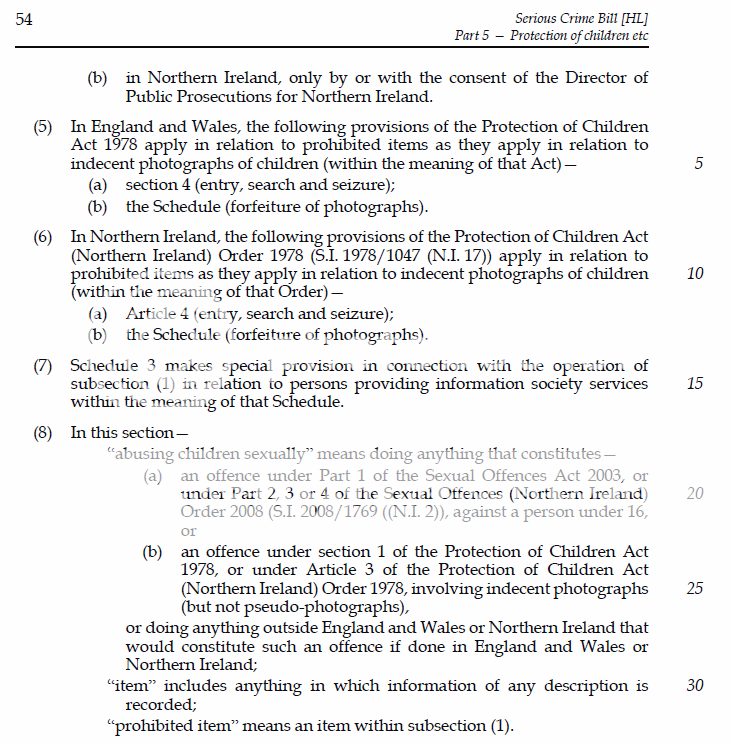
Serious Crime Bill [HL] 2014-15 

"Summary of the Serious Crime Bill [HL] 2014-15 

A Bill To amend the Proceeds of Crime Act 2002, the Computer Misuse Act 1990, Part 4 of the Policing and Crime Act 2009, section 1 of the Children and Young Persons Act 1933, the Female Genital Mutilation Act 2003, the Prohibition of Female Genital Mutilation (Scotland) Act 2005 and the Terrorism Act 2006; to make provision about involvement in organised crime groups and about serious crime prevention orders; to make provision for the seizure and forfeiture of drug-cutting agents; to make it an offence to possess an item that contains advice or guidance about committing sexual offences against children; to make provision approving for the purposes of section 8 of the European Union Act 2011 certain draft decisions under Article 352 of the Treaty on the Functioning of the European Union relating to serious crime; and for connected purposes."

http://services.parliament.uk/bills/2014-15/seriouscrime.html

Serious Crime Bill - Commons Library Research Paper 


http://www.parliament.uk/briefing-papers/RP14-67/serious-crime-bill

Protection of Children Act 1978 


'Abusing Children Sexually'

http://www.legislation.gov.uk/ukpga/1978/37

*****

Collection of information (Terrorism Act 2000 s58)

http://as.exeter.ac.uk/it/regulations/regs/terrorismcoc/

Terrorism Act 2006

http://en.wikipedia.org/wiki/Terrorism_Act_2006

Providing material support for terrorism

http://en.wikipedia.org/wiki/Providing_material_support_for_terrorism

*****

We require these questions to be answered; in this Bill ...

What is the statutory definition of 'abuse'?

What is the statutory definition of 'child'?

What is the statutory definition of 'sexually'?

What is the statutory definition of 'paedophile'?

Something on 'advice' and 'guidance', would also be useful.

 *****


"The 120 Days of Sodom is the Marquis de Sade's masterpiece. A still unsurpassed catalogue of sexual perversions and the first systematic exploration of the psychopathology of sex, it was written during Sade's lengthy imprisonment for sexual deviancy and blasphemy and then lost after the storming of the Bastille during the French Revolution in 1789.

Later rediscovered, the manuscript remained unpublished until 1936 and is now introduced by Simone de Beauvoir's landmark essay, 'Must We Burn Sade?' Unique in its enduring capacity to shock and provoke, The 120 Days of Sodom must stand as one of the most controversial books ever written, and a fine example of the Libertine novel, a genre inspired by eroticism and anti-establishmentarianism, that effectively ended with the French Revolution."

Will these (or anything like them) come under The Act?

The 120 Days of Sodom 

http://en.wikipedia.org/wiki/The_120_Days_of_Sodom

Salò, or the 120 Days of Sodom

http://en.wikipedia.org/wiki/Sal%C3%B2,_or_the_120_Days_of_Sodom

Will anyone linking to them, do so?

*****
(Embedded Tweet - click date)

*****

What can we say? ...
(Embedded Tweets - click date)

*****

More to follow.